

Education
From Classrooms to Boardrooms: How AI and Human Wisdom Are Reshaping Executive Education for a New World Order

Singapore, 25 August 2026 – There is a question being asked in conference halls, university boardrooms and government strategy rooms across Asia and beyond — and it does not have an easy answer: What should the future of executive learning really look like?
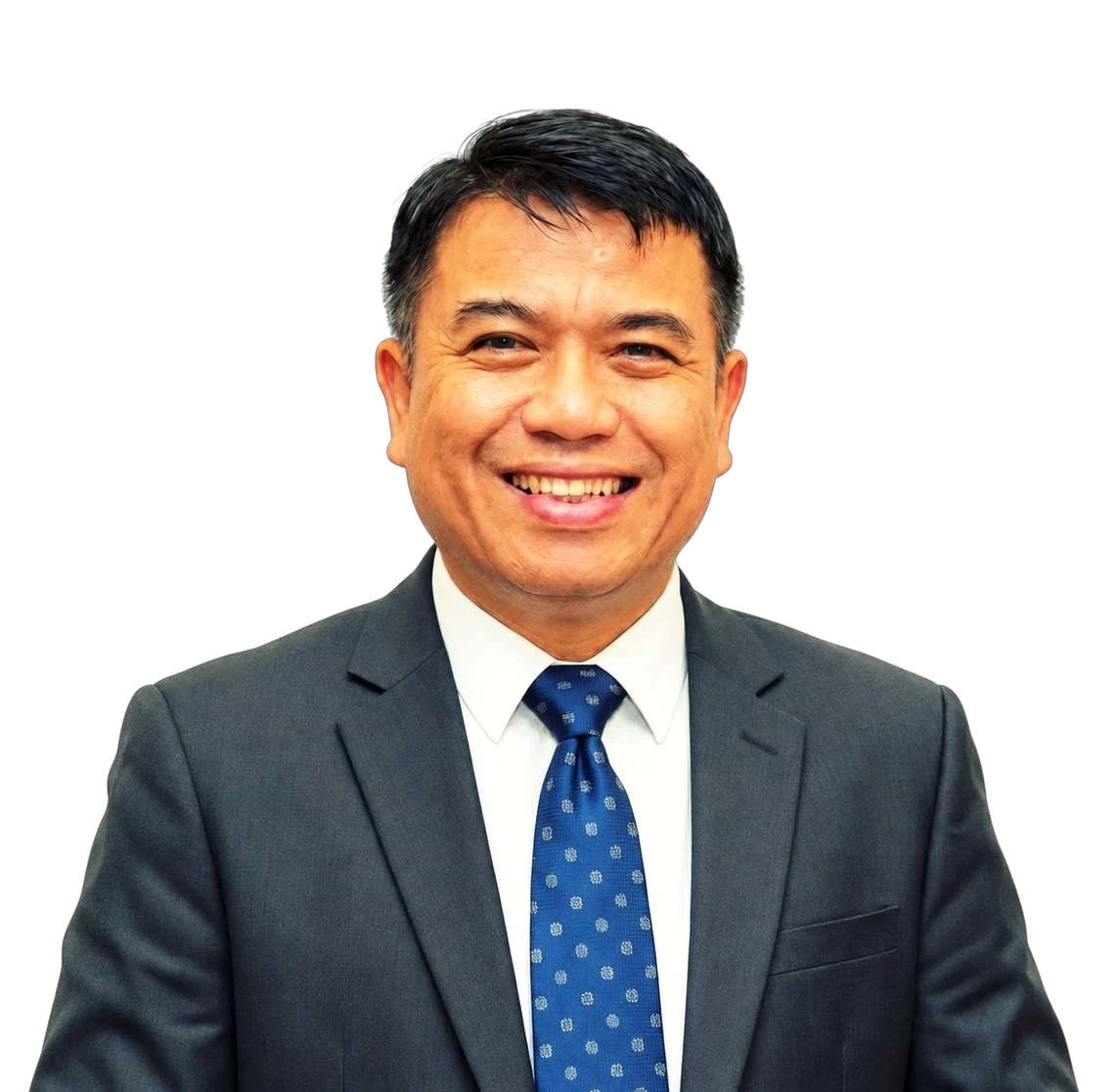
For Prof Dr M Nazri Muhd, Group Executive Chairman of the Centre for AI Innovation (CEAI) Global and Dean of the School of AI & Design Thinking at The Thames International University (Paris, France), the answer came not from a textbook but from a conviction forged through years of deploying AI in real organisations across real markets. He carried that conviction with him to Manila, Philippines, where he addressed the Global EuroAsia Excellence Summit 2026 on 25 August 2026 at Hotel Sheraton Manila Bay — a landmark gathering convened under the banner of Leadership | Innovation | Education | Sustainability.
His message was direct, and deliberately disruptive: executive education can no longer afford to remain confined to lecture theatres, theoretical frameworks and conventional dissertations. The future demands something far more applied, far more human, and far more consequential.
A New Architecture for Learning
In an era where Artificial Intelligence can simulate possibilities, stress-test assumptions and accelerate data analysis at unprecedented speed, the risk is not that AI replaces human leadership — it is that educational institutions fail to prepare leaders who can wield AI with wisdom, ethics and empathy. Prof Dr Nazri’s position is unambiguous: the future is not AI versus humans. It is AI amplified by human judgement.
This philosophy underpins the forthcoming AIDT University offering, which introduces an Executive Doctorate in Business Administration (EDBA) in Applied AI — anchored in what is described as the 1 AI / 1 DBA model. Rather than culminating in a traditional dissertation, participants are expected to design, build, test and deploy a real AI project targeting an actual organisational challenge. Outcomes are validated through sandbox environments and measured through demonstrable real-world impact — a significant departure from conventional doctoral models.
For Singapore, where the government has invested heavily in AI governance frameworks, SkillsFuture initiatives and Smart Nation infrastructure, this model resonates deeply. The city-state’s push for AI-competent leadership across both public and private sectors aligns precisely with what Prof Dr Nazri is building — programmes that do not merely study AI but deploy it in service of transformation.
One Mission Across 20 Nations
The ambition does not stop at individual learning journeys. Through the AIDT Lab @ World Business Chamber (WBC) — operating across 20-plus countries — sector-specific challenges are converted into structured problem statements, diagnosed using AI, redesigned through Design Thinking, piloted in controlled environments, and scaled into measurable solutions. The ten high-impact sectors addressed include healthcare, financial services, manufacturing, education, energy, sustainability and public governance.
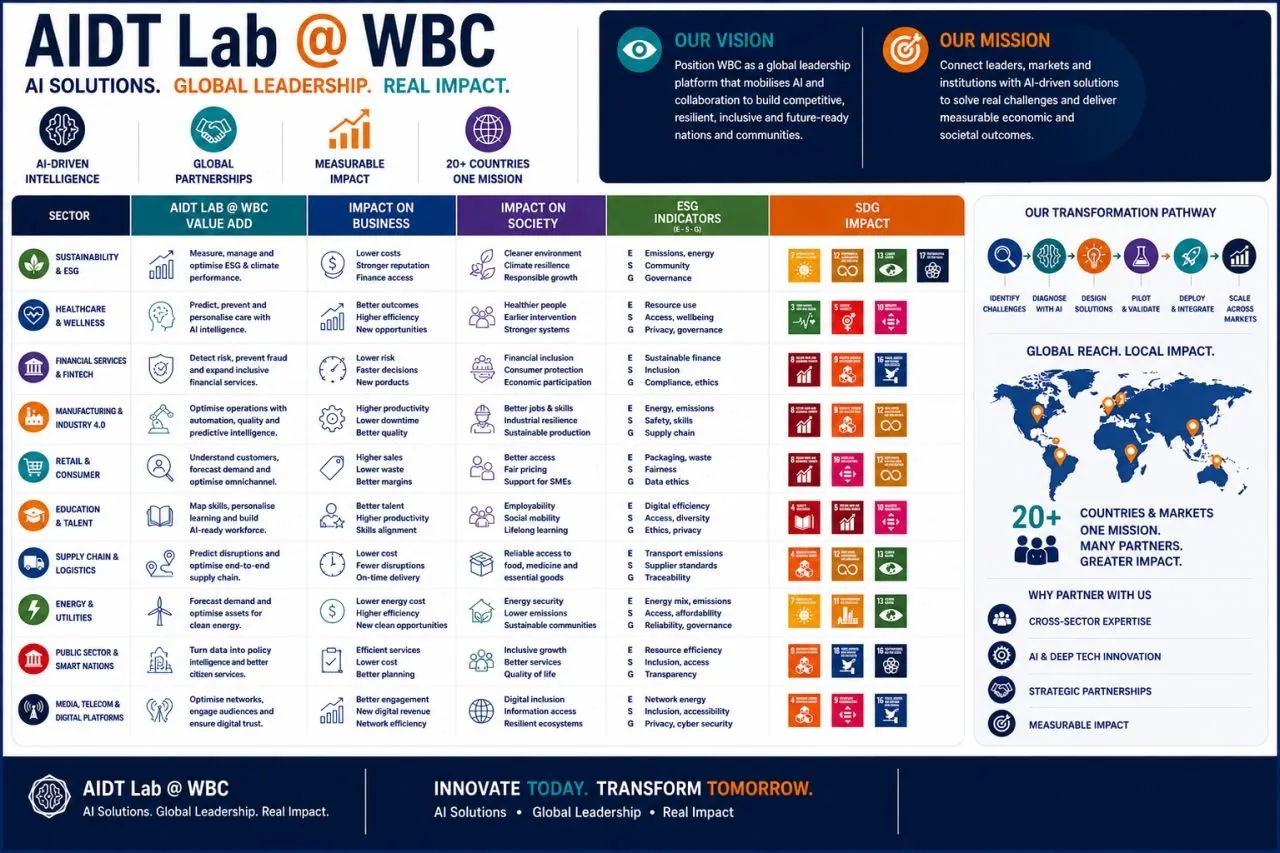
Prof Dr Nazri serves as Founding Vice-President (AI) and chairs the AI Committee at WBC, giving the initiative both credibility and institutional reach. For the international community watching Singapore’s role as a regional AI hub, this cross-border approach signals a maturing ecosystem — one where learning, leadership and applied technology converge into a single, scalable mission.
The Summit itself reflected a convergence of institutional will. Associate partners including CEAI, Thames International, the Indian Institute of Research and Management, UREDUCONNECT, the CED Foundation and Consult Machica Group signal a coalition forming around a shared conviction: that executive education must serve society, not merely credential individuals.
The Imperative for Leaders Today
Prof Dr Nazri’s recognition by Thinkers360 — ranked #1 globally in Digital Transformation, Artificial Intelligence and Predictive Analytics, and listed among the Top 10 Thought Leaders Overall — lends authority to a message that is as urgent as it is visionary.
His rallying call to executives, policymakers, academics and students alike is clear: Do not merely study AI. Use AI to transform something that matters. Be an AI Creator.
In Singapore and across the Asia-Pacific, where the race for talent, competitiveness and future-readiness intensifies by the quarter, that call may well define the next chapter of leadership education.
Spokesperson Quote
“The future of executive learning must be radically reimagined. It cannot remain theoretical — it must be human-centric, AI-powered, and deeply connected to real transformation challenges. Through the EDBA in Applied AI and the AIDT Lab @ WBC, we are not building another programme. We are building a new generation of AI Creators — leaders who design, deploy and scale solutions that deliver measurable impact across nations and sectors. AI amplifies human judgement; it does not replace it. What we need now are leaders courageous enough to act on that truth, and institutions bold enough to build it into their DNA. Singapore, with its Smart Nation vision and AI governance leadership, is precisely where this conversation must be anchored and scaled globally.”
Prof Dr M Nazri Muhd, Group Executive Chairman, Centre for AI Innovation (CEAI) Global | Dean, School of AI & Design Thinking, The Thames International University (Paris, France)