Announcement
From Diabetes to Degenerative Illnesses and Mental Health: Malaysia Advances an Integrated AI-Enabled Preventive Healthcare Model
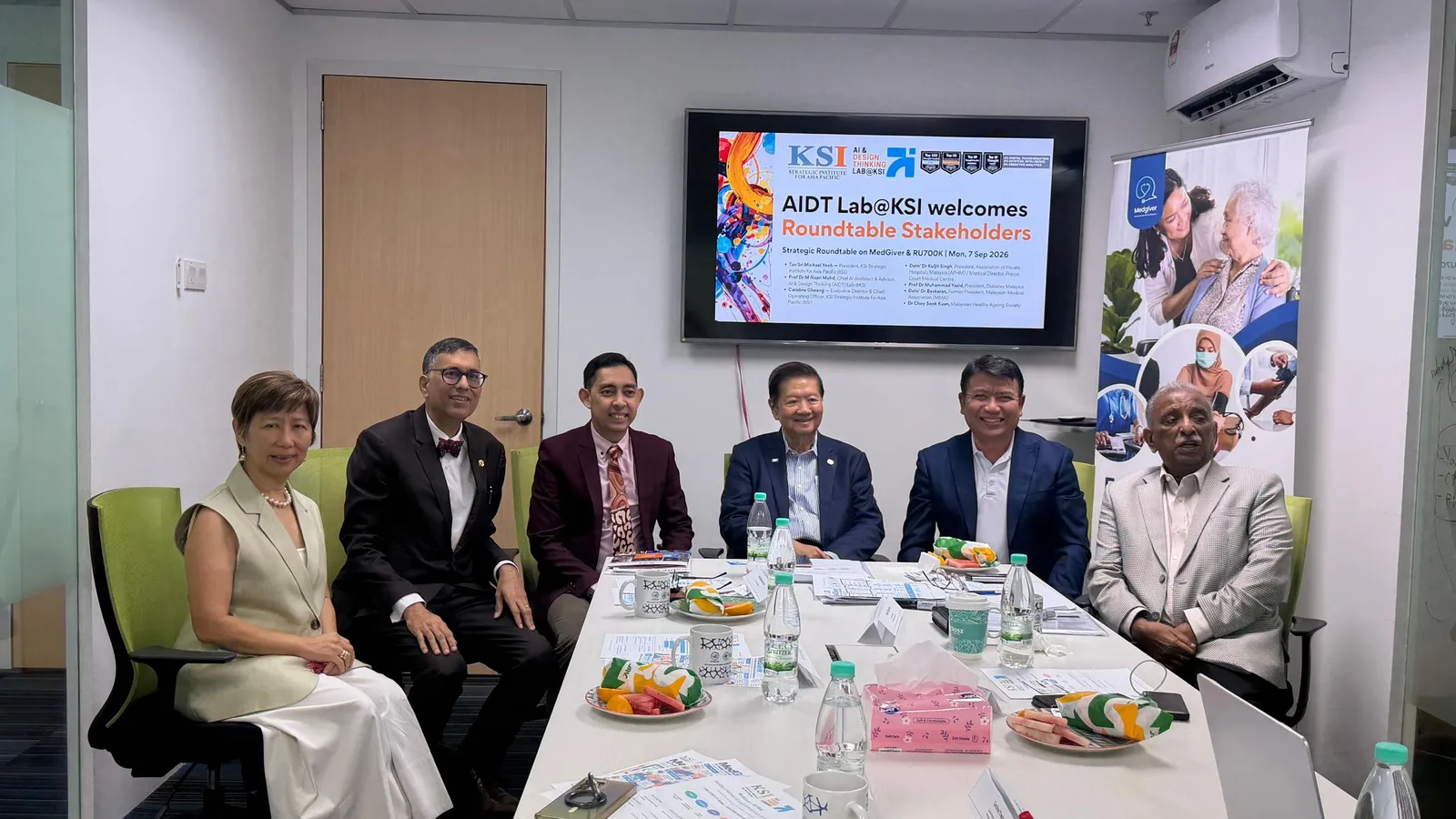
Malaysia, 7 September 2026 – In a landmark convergence of artificial intelligence, public health advocacy and community empowerment, the Centre for AI Innovation, Global (CEAI Global), Kingsley Advisory & Strategic Initiatives Sdn Bhd (KSI), Diabetes Malaysia and the Malaysian Healthy Ageing Society (MHAS) have signalled their collective intent to develop a more preventive, community-centred and AI-enabled healthcare ecosystem.
At the heart of the collaboration is a critical recognition: diabetes, degenerative and age-related illnesses, mental health and healthy ageing cannot be addressed effectively in isolation. They increasingly converge within the same individual, household and caregiving environment.
The latest national evidence underscores the urgency. NHMS 2025 found that only 14.7% of Malaysians aged 60 and above met the criteria for “ageing well”. Among older Malaysians, 39.1% had diabetes, 9.8% had dementia and 8.0% had depression. Furthermore, 45.3% had sarcopenia, 60.0% were pre-frail and 10.7% were frail.
This is therefore no longer simply a question of managing individual diseases. It is about managing the interconnections between physical health, chronic disease, cognitive and functional decline, mental wellbeing and the capacity of families and caregivers to provide continuing support. The collaboration, structured around a flagship platform — MedGiver — is designed not merely as a technological experiment but as a systemic reimagining of how preventive and community care can be delivered with measurable impact at scale.
MedGiver: From Risk Identification to Clinical Escalation — AI Meets Compassionate Caregiving
At the operational core of this collaboration sits MedGiver, a platform designed to bridge the gap between home-based care and professional clinical intervention. Through MedGiver, the four parties will explore practical AI-enabled solutions that support patients and caregivers across the continuum of care — from risk identification and home monitoring through to timely clinical escalation.
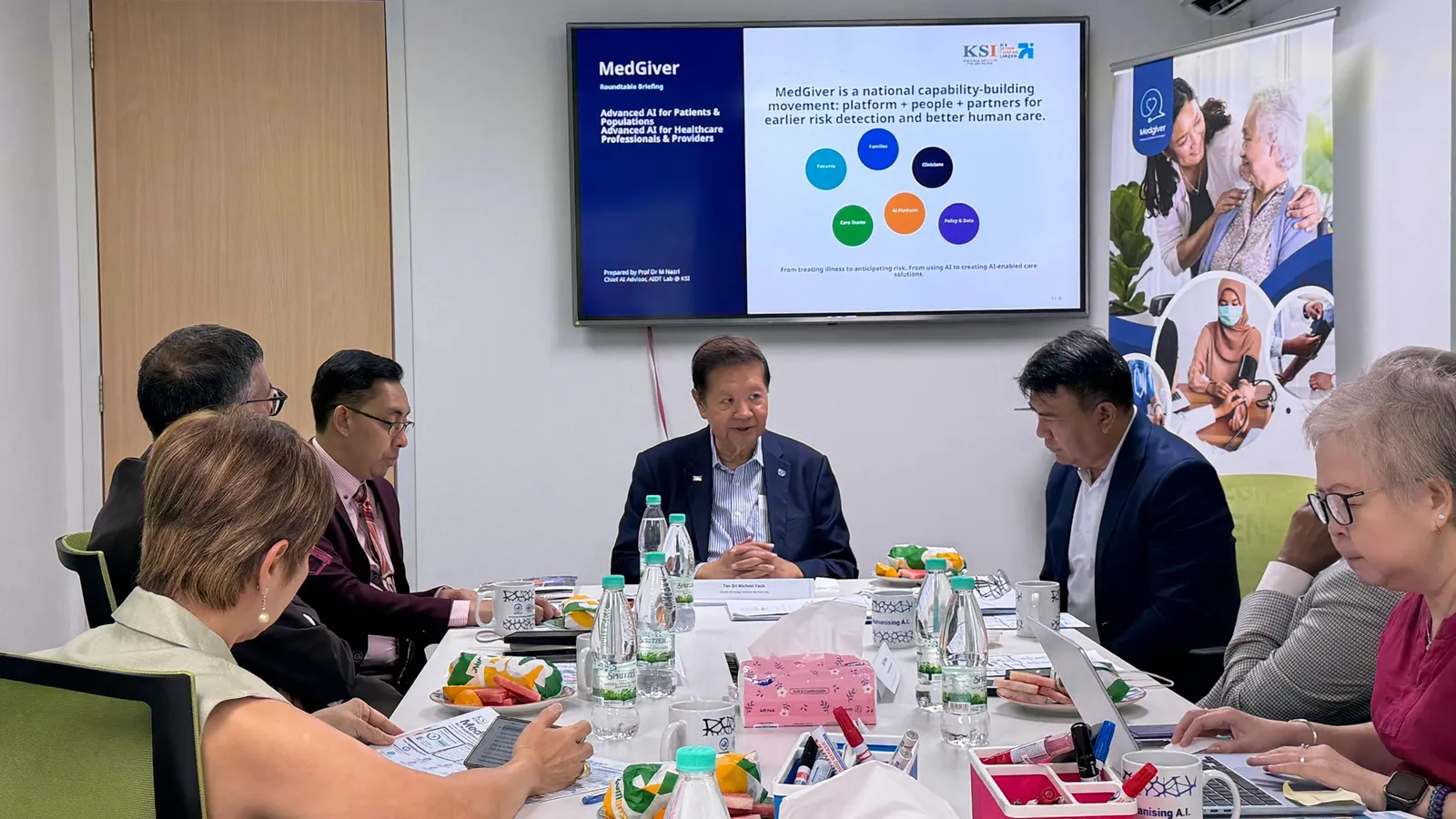
The significance of this approach cannot be understated. A persistent challenge within Malaysia’s public health system is the fragmented nature of care delivery. Patients are often discharged from hospitals and returned to communities where follow-up monitoring is inconsistent, caregivers are unsupported and undertrained, and early warning signs of deterioration go unrecognised until a crisis demands emergency intervention. This cycle is costly, preventable, and deeply human in its consequences.
MedGiver seeks to interrupt this cycle. By deploying AI-enabled monitoring tools that are accessible to patients and caregivers within the home environment, the platform aims to create a continuous, intelligent thread of health data that enables early identification of risks, supports informed self-management decisions and ensures appropriate and timely escalation to healthcare professionals when required.
Diabetes Malaysia will play a pivotal role in supporting the patient and community pathway under this framework. Its emphasis will be placed on earlier diabetes risk identification, patient education, community screening, self-management support and structured referral pathways — ensuring that the grassroots reach of one of Malaysia’s most trusted diabetes advocacy organisations is fully harnessed and digitally amplified through AI.
MHAS will anchor the home and prevention pathway, advancing healthy ageing practices, building caregiver capability, and facilitating the early identification of age-related health risks. Critically, MHAS will also establish protocols for appropriate escalation to healthcare professionals — a function that is essential in a landscape where caregivers are frequently the first and sometimes only line of observation within the home.
Together, these institutional roles create a closed-loop model of care: one in which AI does not replace human judgement but rather enhances it, ensuring that the right information reaches the right person at the right time.
A Multi-Sector Model That Speaks to the Whole Ecosystem
What distinguishes this collaboration from other technology-in-health announcements is its deliberate multi-sector architecture. CEAI Global brings deep AI innovation capability and a global perspective on responsible AI deployment. KSI provides strategic ecosystem leadership, convening power and the institutional gravitas required to catalyse cross-sector alignment. Diabetes Malaysia and MHAS contribute the ground-level trust, patient networks and clinical credibility that are indispensable for genuine community adoption.
This complementarity is not incidental — it is the collaboration’s structural strength. Each party contributes what the others cannot replicate, and the result is a coalition that spans AI, strategy, medicine and community care in a manner that is greater than the sum of its parts.
From the perspective of policymakers, this model offers something particularly valuable: a replicable template for how public health institutions, civil society organisations, and AI innovators can co-develop solutions that are both technically credible and socially embedded. If proven effective at scale, it provides a responsible pathway for national adoption — one grounded in evidence, community trust and institutional accountability rather than technology hype.
A Preventive Turn That Malaysia Cannot Afford to Delay
For too long, Malaysia’s healthcare resourcing has been weighted heavily toward curative intervention — treating conditions after they have already taken hold, at a stage when human suffering and economic costs are both substantially higher. The World Health Organisation has long advocated for a rebalancing toward prevention, and Malaysia’s own health authorities have echoed this imperative across successive national health plans.
The CEAI Global–KSI–Diabetes Malaysia–MHAS collaboration represents a rare and timely operationalisation of that preventive philosophy. By combining AI-enabled early detection and monitoring with community education, caregiver empowerment and professional clinical oversight, the collaboration seeks to shift the centre of gravity in Malaysia’s health system — from the hospital ward toward the household; from reactive treatment toward proactive management.
This shift is not without challenges. Questions of data privacy, algorithmic accountability, health equity and the regulatory readiness of AI-enabled health tools remain live and important concerns that must be navigated with care and transparency. The responsible deployment of AI in healthcare demands not only technical rigour but ethical diligence — and Malaysia’s regulatory environment, including frameworks being developed by the Ministry of Health and the National AI Governance Framework, will have a significant role in shaping how such collaborations can scale.
Nevertheless, the ambition expressed by these four institutions sends a clear signal: that Malaysia’s healthcare future will not be built by any single sector alone. It will be built through collaborations exactly like this — bold, grounded, multi-stakeholder, and unambiguously oriented toward the well-being of every Malaysian.
Spokesperson Statements
“This collaboration marks a pivotal moment in Malaysia’s journey toward a more resilient and future-ready healthcare ecosystem. At KSI, we have long believed that meaningful transformation requires the convergence of strategy, innovation and genuine community commitment. By bringing together CEAI Global, Diabetes Malaysia and MHAS under a shared vision, we are not simply piloting a technology programme — we are building a new model of care that is preventive, people-centred and powered by responsible AI. Malaysia has the talent, the institutional capability and the national will to lead this transformation. Through MedGiver, we intend to demonstrate that AI-enabled community care is not a distant aspiration — it is an achievable and urgently necessary reality for the millions of Malaysians and caregivers who deserve better support today.”
Tan Sri Michael Yeoh, President, KSI Strategic Institute for Asia Pacific, Kingsley Advisory & Strategic Initiatives Sdn Bhd (KSI)
“AI must serve people — and this collaboration is precisely how we ensure it does. CEAI Global is committed to developing AI solutions that are not only technically robust but deeply human in their application. Through MedGiver, we are creating an intelligent continuum of care that empowers patients and caregivers with real-time insight, while ensuring that clinical professionals remain at the centre of decision-making. When a caregiver understands AI, when a diabetes educator can interpret AI-generated insights, and when a community health worker is AI-literate, the technology finally reaches its full potential. That is the transformation we are building — one community, one caregiver, one AI-enabled decision at a time.”
Prof Dr M Nazri Muhd, Group Executive Chairman, Centre for AI Innovation, Global (CEAI Global) and Chief AI Architect & Advisor, AI & Design Thinking (AIDT) Lab @ KSI Strategic Institute for Asia Pacific
“Diabetes is not merely a clinical condition — it is a community challenge that demands a community response. Diabetes Malaysia has spent decades building trust with patients, families and frontline health workers across this nation, and we are proud to bring that trust into this collaboration. Through MedGiver, we will extend our reach into homes and communities where diabetes risk is often undetected until significant harm has occurred. Earlier identification, better education and supported self-management are not optional extras — they are the foundation of any serious diabetes strategy. Partnering with CEAI Global, KSI and MHAS allows us to amplify our impact through AI in ways that are responsible, clinically informed and genuinely patient-centred. We look forward to demonstrating that AI and community care are not competing forces — they are powerful allies in the fight against diabetes.”
Prof Dr Muhammad Yazid, President, Diabetes Malaysia
“Healthy ageing does not happen in hospitals — it happens at home, in communities, through the quiet and often invisible work of caregivers who are frequently unsupported and overwhelmed. MHAS has championed the cause of healthy ageing and caregiver empowerment for many years, and this collaboration gives us the most powerful set of tools we have ever had access to. AI-enabled home monitoring, early risk identification and structured escalation pathways can transform what is possible for older Malaysians and their families. Through MedGiver, we will build the caregiver capability and community infrastructure that responsible AI deployment demands. Our commitment is to ensure that no older Malaysian faces a health crisis alone, and that every caregiver has the knowledge, tools and support to act with confidence when it matters most.”
Dr Choy Sook Kuen, Malaysian Healthy Ageing Society (MHAS)
Looking Ahead
The formal collaboration between CEAI Global, KSI, Diabetes Malaysia and MHAS is expected to progress through structured phases of co-design, pilot deployment and evidence-based evaluation. Stakeholders across government, healthcare, academia and civil society will be closely watching as Malaysia attempts to build a replicable, scalable and responsible model of AI-enabled community health.
What is already clear is that this collaboration represents something rare and important: a genuine convergence of vision, capability and urgency — directed squarely at one of the most pressing public health challenges of our time. For Malaysia and the region, the stakes could not be higher. Nor could the opportunity.


Media Contact
About KSI Strategic Institute for Asia Pacific (KSI)
KSI Strategic Institute for Asia Pacific (KSI) is an independent not-for-profit think tank dedicated to improve socio-economic wellbeing through the development of public policy ideas, research, public interaction, and strategic insight. We provide policy advocacy, leadership development and strategic planning to policy makers and business leaders. We are the leading curator of impactful and innovative high-level conferences and forums, providing platforms for the best minds to meet, interact, discuss issues and trends impacting on business and competitiveness.
About AI & Design Thinking (AIDT) Lab @ KSI
The AI & Design Thinking (AIDT) Lab @ KSI is a joint venture between CEAI Global and KSI Strategic Institute for Asia Pacific, combining CEAI’s AI capabilities with KSI’s strategic leadership and regional networks to advance human-centred AI, digital transformation, capability building and measurable solutions for governments, businesses and communities.
For further information, please contact:
Hazliza Abu Hasan
T: +603 6419 9698
F: +603 6419 9683
E: hazliza@kasi.asia
About Centre for AI Innovation (CEAI), Global
Centre for AI Innovation (CEAI), Global is an independent AI innovation and transformation organisation dedicated to advancing socio-economic development through artificial intelligence, digital innovation, capability building, and strategic advisory. We provide AI strategy, leadership development, technology advisory, research, and ecosystem-building programmes to governments, businesses, educational institutions, and communities. We are a leading catalyst for AI adoption and innovation, convening thought leaders, policymakers, industry experts, researchers, and innovators through conferences, forums, workshops, and collaborative initiatives to accelerate responsible AI transformation and sustainable economic growth.
For further information, please contact:
Addiennur Hamizah
T: +65 9627 9757 | +60 11 1769 5760
E: hamizah@ceaiglobal.com
About Diabetes Malaysia
Diabetes Malaysia is a national non-governmental organisation (NGO) dedicated to raising awareness of diabetes prevention and control and supporting people living with diabetes to better manage the condition. Its activities span public awareness, patient support, member wellness, continuing medical education and World Diabetes Day programmes, supported by state and district networks across Malaysia. The organisation also engages healthcare professionals and communities, providing education, resources and practical support to strengthen diabetes prevention, management and public understanding nationwide.
For further information, please contact:
T: +60379574062
E: pdm@diabetesmalaysia.org.my
About Malaysian Healthy Ageing Society (MHAS)
The Malaysian Healthy Ageing Society (MHAS) is a non-profit organisation dedicated to advancing understanding and awareness of healthy ageing among physicians, scientists and the public. MHAS promotes approaches aimed at improving health, function and quality of life as people grow older, including greater understanding of physiological changes associated with ageing. Through education, events, publications, webinars, podcasts and professional and public engagement, MHAS supports Malaysia’s efforts to help people live longer, healthier and better lives.
For further information, please contact:
T: +60123646109
E: info@healthyageing.org